Showing posts with label shellfish. Show all posts

Saturday, December 22, 2007

Welk Souvenir

A cousin of mine, Tim Clark for TLC Creations, who owns a house here in Old Harry, makes these charms that are anywhere from one to three inches in size. He strings them on chains for pendants, hooks for Christmas tree ornaments and loops for pierced earrings. They are so beautiful and unique gifts to give at Christmas.

It takes many hours to make one, I would imagine. I've never tried making any but I understand it is difficult because the welk (conque, sucker,) shell is very hard and if cut with a band saw it will break into a million pieces. No, the only way to make these is by painstakingly and lovingly working the shell away until all that is left is a cross cut of the center of the shell. They have the most amazing pastel colours to them also.


Wednesday, November 28, 2007

The Common Sand Dollar (Echinarachnius parma)

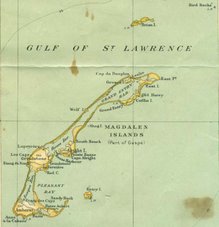
The beaches of the Magdalen Islands are littered with shell of all types. One of the most treasured shells found is the sand dollar. The fragile disk is the skeleton or "test" of a marine animal. By the time the test washes up on the beach, it is missing its velvety covering of minute spines and appears somewhat bleached from the sun.

Sand dollars are from the class of marine animals known as Echinoids, spiny skinned creatures. Their relations include the sea lily, the sea cucumber, the star fish and the sea urchin. When alive, the sand dollar is outfitted in a maroon-colored suit of movable spines that encompass the entire shell. Like its close relative the sea urchin, the sand dollar has five sets of pores arranged petal pattern. The pores are used to move sea water into its internal water-vascular system which allows for movement.

Sand dollars live beyond mean low water on top of or just beneath the surface of sandy or muddy areas. The spines on the somewhat flattened underside of the animal allow it to burrow or to slowly creep through the sand. Fine, hair-like cilia cover the tiny spines. These cilia, in combination with a mucous coating, move food to the mouth opening which is in the center of the star shaped grooves on the underside of the animal. Its food consists of plankters and organic particles that end up in the sandy bottom.

Because of their small size and relatively hard skeleton, few animals bother sand dollars. One animal found to enjoy them on occasion is the thick-lipped, eel-like ocean pout, snails, sea stars (starfish) and skates (rays).

On the ocean floor, sand dollars are frequently found together. This is due in part to their preference of soft bottom areas, as well as convenience for reproduction. The sexes are separate and gametes are released into the water column as in most echinoids. The free-swimming larvae metamorphose through several stages before the test begins to form and they become bottom dwellers.

Since the sand dollar lives in sandy locations, anyone who would like to collect their shells should comb beaches as the tide recedes. The very best time for collecting is after a heavy storm, as many of the shells that have died are dredged up by the increased wave action. Some say that sand dollars are pressed sand that has been dried or even the money of mermaids washed-up from the deep.

The Sand Dollar


About the life of Jesus and the wondrous tale of old.
The center marking plainly shows,
The well known guiding star
That led to tiny "Bethlehem"
The wise men from afar.

The Christmas flower poinsettia,
For his nativity, the resurrection
Too is marked, The Easter Lily, see.

Five wounds were suffered by our Lord,
From nails and roman spears
When he died for us upon the cross,
The wounds show plainly here.

Within the shell should it be broke,
Five doves of peace are found
To emphasize this legend
So may peace and love abound.

Atlantic Snow Crab (Chionoecetes opilio)

Atlantic Snow crabs are crustaceans and belong to the family of spider crabs, so-called because of their long, slender legs. Magdalen Islands fishermen originally marketed this species under the name queen crab.

The Islands fishery for these shellfish began slowly in 1967 after exploratory fishing efforts found abundant stocks in the Gulf of St Lawrence. Since that time, the fishery has developed rapidly and snow crabs rank with lobster and salmon among Atlantic Canada's top taste treats in fish products. It is economically valued second only to lobster on the Magdalen Islands and it's flavour value is gaining popularity amongst islanders.

Snow crabs have a flattened, almost circular body and five pairs of long spider-like legs, one pair of which is equipped with strong claws. The upper surface of the shell is orangery tan and the underneath is creamy white. When fully mature, males are twice as large as the females and average about 13 cm across the body shell. Average weight of these crabs in the commercial catch is .7 kg. In Canadian waters they are commonly found on the muddy or sandy sea floor at 75-450 meters deep.

In the Gulf, snow crabs are landed from May through September. Fishermen harvest snow crabs from 16-18 meters boats which have been converted from gill-netting, seining or dragging for groundfish. Each boat works about 35-80 square steel framed traps. These traps are baited, set singly and hauled daily by ropes which lead to surface buoys. The crabs are stored alive on ice in the boats hold.

A gourmet food item, snow crab meat is marketed in Canada, the United States and Europe as cooked frozen and canned meat.

Friday, November 23, 2007

The American Lobster (Homarus americanus)

The American lobster is widely acclaimed for it's delicious meat and is the mainstay of the fishing industry on the Magdalen Islands. Their shell-armoured body is divided into two main sections, the combined head and thorax, and the six-jointed abdomen commonly called the "tail". There are two pairs of antennae, a complicated set of mouth parts, and two black eyes mounted on short movable stalks set on either side of a stout, spiny horn.

The body rests on four pairs of spindly, jointed walking legs, the first two pairs of which have small claws. Two large front legs provide the lobster with formidable tools for capturing food. The are well-armed with strong claws generously equipped with teeth and sharp spines. Usually, on claw is considerably heavier and is known as the "crusher" in contrast to the other, more slender "pincer". There is a series of small paddles or swimmerets on the underside of the abdomen, which ends in a wide, flattened tail fan.

The shell is often speckled with dark spots and varies in colour from greenish blue to reddish brown. Lobster are great scavengers and live chiefly on fish (dead or alive) and immobile or slow moving invertebrates such as mussels, sea urchins, crabs and worms which inhabit the sea bottom. Lobsters in the commercial catch are larger on the islands than elsewhere in North America because of the conservation methods implemented by the Department of Fisheries and Oceans Quebec.

The annual commercial catch for the Magdalen Islands exceeds $50 million.